In recent years, E-E-A-T has become a key criterion Google uses to determine which websites deserve a place on the first page. While SEO once relied primarily on keywords and links, in 2025 trust and authority are the decisive factors.
With the arrival of AI Overview, Google no longer simply indexes text – it aims to understand who is behind it and whether they are a reliable and credible source.
What is E-E-A-T and why is it so important?
E-E-A-T is not simply the latest SEO buzzword gaining traction. In 2025, it is among the main criteria Google uses to assess which websites deserve a place on the first page in the age of generative search and AI Overview.
E-E-A-T stands for
- Experience – genuine practical experience of the subject;
- Expertise – professional knowledge and competence;
- Authoritativeness – recognition from other reliable sources;
- Trustworthiness – security, transparency and reliability of information.
This framework is described in the Google Quality Rater Guidelines 2025 and serves as a guide to how algorithms and specially trained raters determine the value of a page.
It is important to emphasise that E-E-A-T in SEO is not a direct ranking factor, but a set of principles through which Google determines whether content is authentic, useful and trustworthy.
While SEO once focused on keywords and links, Google now prioritises ensuring that users reach authoritative content created by people with genuine experience and proven expertise.
How does Google assess content, and where does trust come from?
Google uses complex algorithms and artificial intelligence to identify credible content. In the age of AI Overview (SGE), the search engine no longer merely indexes text; it also aims to understand who is behind it.
But what exactly is AI Overview?
It is a new Google technology that uses artificial intelligence to create summarised answers directly within search results. Rather than displaying only a list of links, Google now extracts and combines information from different sources to provide users with ready-made conclusions.
For content to appear in these summaries, it must meet strict criteria for credibility and practical value.
The main factors Google analyses include:
- Whether the author or brand has proven experience in the subject;
- Whether the website is cited and receives links from reliable sources – a well-developed E-E-A-T and link-building strategy;
- Whether the content is clearly structured, accurate and up to date;
- Whether the information is secured through HTTPS and transparent to users;
- Whether the business has a genuine presence – contact details, a location and a team.
If Google does not find enough of these signals, the page risks being overlooked, even when the text is grammatically perfect. This is because, in 2025, algorithms are not merely looking for words, but for trust supported by real evidence.
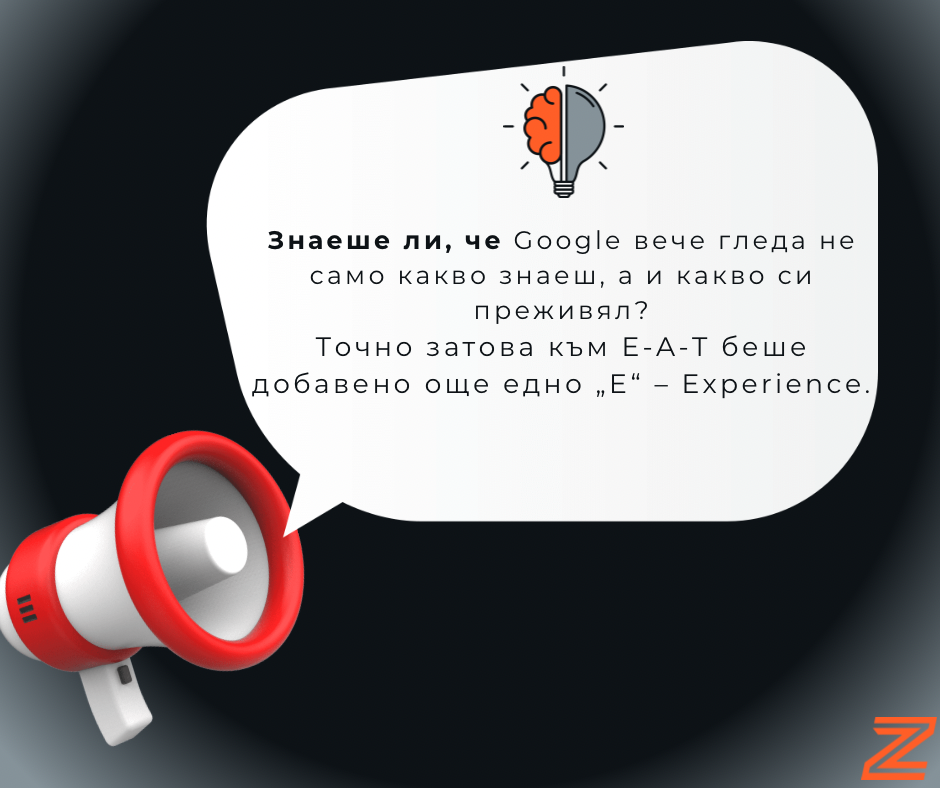
E-A-T vs E-E-A-T – What is the difference?
The original model was E-A-T – Expertise, Authoritativeness and Trustworthiness. Google subsequently added Experience. Why?
Because practical knowledge and genuine experience often carry more weight than general theoretical claims. For example, an article on ‘How to treat a sports injury’, written by a professional athlete with personal experience or by a medically qualified specialist, carries significantly more weight with Google than a text created by an anonymous author with no experience.
Adding ‘Experience’ makes E-E-A-T an even more powerful tool for identifying authentic content.
How can we improve E-E-A-T in our SEO strategy?
To build lasting trust online and improve its visibility in search engines, a business must establish itself as an expert in its field and a reliable partner for its customers. Some of the most effective practices include:
- Publishing original content based on genuine professional experience;
- Introducing authors through biographies that highlight their expertise and qualifications;
- Citing reliable sources of information;
- Building high-quality links with established domains;
- Regularly updating content;
- Adding reviews, case studies and testimonials from real customers.
At Z-Consult, we integrate E-E-A-T factors from the strategy stage onwards – from detailed keyword analysis to creating authoritative content and building a sustainable link profile. When experience, supported by evidence, is combined with consistent updates, the result is a stable SEO presence and lasting visibility on Google.
Examples of E-E-A-T in real businesses
- Medical clinics publish articles written by doctors or medically qualified individuals;
- Financial firms present analyses by licensed experts;
- Online shops display genuine customer reviews and transparent terms;
- Educational platforms share content by certified teachers and experts in the relevant field.
Every industry can use E-E-A-T to build trust and increase its visibility on Google.
It is time to build trust online
There is no room for mediocre content in the digital landscape of 2025. Businesses that want to win customers must demonstrate their expertise and reliability. E-E-A-T is not simply another algorithm – it is a roadmap for building long-term authority on Google.
If you want your business to be visible, recognisable and preferred, now is the time to act. Invest in building authority and trust through high-quality content and a consistent strategy, so that you can be among those who earn their customers’ attention and loyalty.
Frequently asked questions (FAQ)
- What does E-E-A-T mean in SEO, and why is it important for my business?
E-E-A-T is a framework for assessing content that covers Experience, Expertise, Authoritativeness and Trustworthiness. Google uses it to determine whether a website offers reliable, authentic and useful information. The stronger these signals are, the greater the chances that your website will rank in leading positions and build lasting trust among users.
- What is the difference between E-A-T and E-E-A-T?
E-A-T covered Expertise, Authoritativeness and Trustworthiness. By adding ‘Experience’, Google emphasised the importance of the author’s or brand’s genuine practical experience. E-E-A-T therefore places greater emphasis on the authenticity and practical value of content.
- What is E-E-A-T blog content?
These are articles created by authors with proven experience and expertise, supported by reliable sources and practical examples. This type of content increases audience trust and helps the website achieve higher rankings.
- How do E-E-A-T and link building work together?
Link building is a key signal of authority. When your content receives links from reliable websites, this shows Google that the information is valuable and worthy of attention. Combined with E-E-A-T factors, links build a solid foundation for success.
- How can I tell whether my blog meets E-E-A-T principles?
Check whether the articles have clearly identified authors, are supported by reliable sources, are updated regularly and receive links from authoritative websites. If these elements are present, you have already built a solid foundation for a strong E-E-A-T presence.
- Why is E-E-A-T important in 2025?
Because in the age of generative search, Google places even greater importance on authenticity, expertise and trust.

Author
Marina Timonova
BEO specialist
Marina works in Z-Consult's BEO/SEO department — structure, content, and the connection between search and business goals.
View author profile